
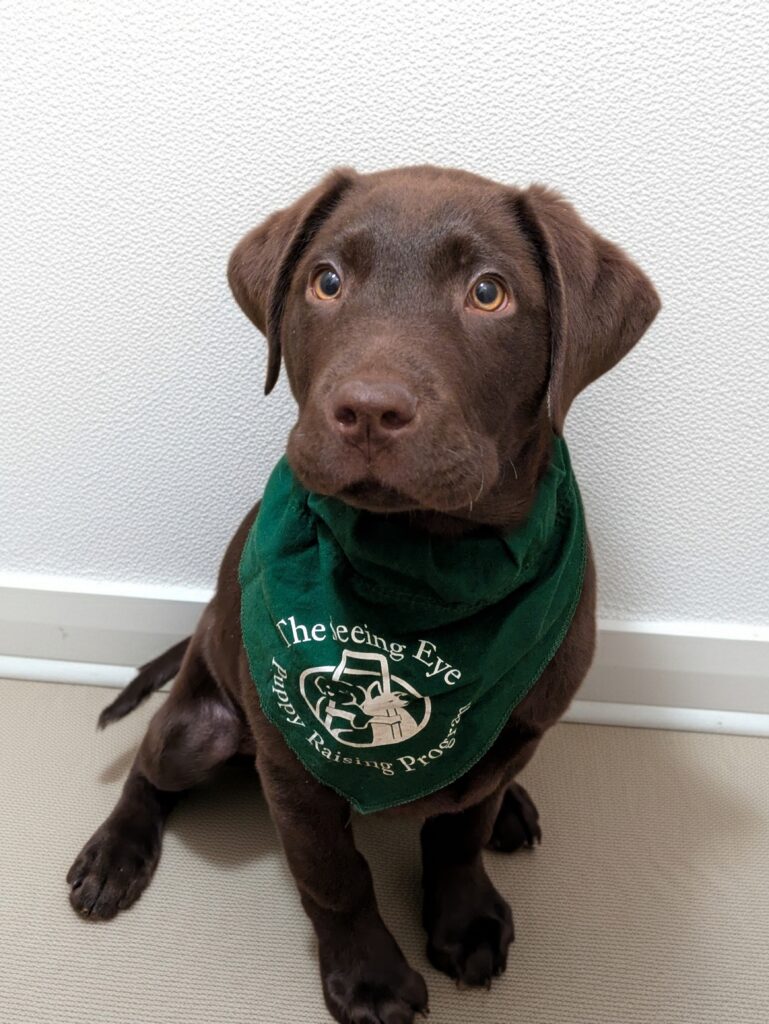
Meet Graham, a loveable chocolate lab and Seeing-Eye puppy-in-training!
It can go without being said that trauma and substance use are significant public health concerns. Trauma-related conditions, such as post-traumatic stress disorder (PTSD), and substance use disorders (SUD), affect millions of individuals nationwide, cutting across age, socioeconomic status, and community boundaries. As treatment providers continue to seek effective, accessible approaches to care, research increasingly supports the value of complementary interventions alongside traditional therapy.
One such intervention involves the use of dogs, particularly trained service animals. Studies examining service dogs for individuals with PTSD suggest these animals can reduce symptom severity and improve overall quality of life. Researchers note that service dogs may help mitigate anxiety, interrupt panic responses, and provide a sense of safety through consistent presence and task-based support.1
In the context of SUD, research highlights the broader human–canine bond as a meaningful source of support. A thematic analysis of individuals in recovery identified three primary benefits: dogs foster social connections, reduce stress and anxiety, and act as a motivating factor for positive change. Through these mechanisms, canine companionship may help divert substance-related thoughts, reduce cravings, and increase engagement in treatment and recovery efforts.2
While not directly tied to addiction or trauma treatment, the Center for Alcohol and Substance Use Studies (CAS) is excited to host their own service-dog-in-training. Meet Graham, a loveable chocolate lab and Seeing-Eye puppy-in-training! He has a very important job ahead of him as he works to become a guide dog for someone who is visually impaired. Graham was brought to the center by Dr. Manny Alvarez. Dr. Alvarez is a new CAS postdoctoral fellow in AI and machine learning. He was brought on to apply his computational skills to Project Harmony. With Dr. Alvarez, Graham will not only learn basic obedience, that is your “sits”, “downs”, and “rests” but also will gain crucial exposure to new environments. He will learn to settle during long academic seminars, develop confidence in loud and crowded spaces (like Rutgers basketball games!), and become accustomed to the daily hustle and bustle of a university. But it’s not all hard work. Graham is a dog of course! When he trucks into the center, he must make his “rounds”, getting pets from all the faculty and staff. He also enjoys long naps, chewing his many bones, and ferociously chowing down on his kibble. We are so incredibly happy to be part of his training and can’t wait to see all the things he will accomplish!
To learn more about The Seeing Eye, please visit their website: https://seeingeye.org/
1 Leighton, S. C. et al. Service Dogs for Veterans and Military Members With Posttraumatic Stress Disorder: A Nonrandomized Controlled Trial. JAMA Network Open 7, e2414686–e2414686 (2024). https://doi.org/10.1001/jamanetworkopen.2024.14686
2 Dell, C. et al. The role of the human-canine bond in recovery from substance use disorder: A scoping review and narrative synthesis. Human-Animal Interactions (2024). https://doi.org/10.1079/hai.2024.0038